Rochester house
We Have Always Lived in the CastleThe Rochester house is the former family home where the Blackwood sisters’ mother was born, remembered as the loveliest house in the Village and as a place of walnut paneling, a ballroom, and roses. By Mary Katherine Blackwood’s account, it ought by rights to have belonged to Constance Blackwood; encountered on a walk through town, it is at once a remnant of family history and a painful landmark in the sisters’ changed circumstances.
Setting and Former Grandeur
The Rochester house had once contained a walnut-paneled library on the ground floor and a ballroom upstairs, with roses thick along the veranda. Mary Katherine describes it as the loveliest house in town, setting its former elegance against the Village’s shabby streets. Its distinction is also personal: the sisters’ mother was born there, before marrying their father and going to live at Blackwood Farm.
A Landmark on the Village Route
After leaving the library on a fine April morning, Mary Katherine chooses how to reach the grocery. One route would take her past the general store, where men sit outside; she finds passing them both going and coming more than she can bear. She instead walks along the side of the street by the post office and the Rochester house, although she dislikes seeing the place where her mother was born. The house is thus part of an ordinary errand, but her chosen route gives that errand the shape of avoidance and reluctant passage through the Village.
Neglect and Family Memory
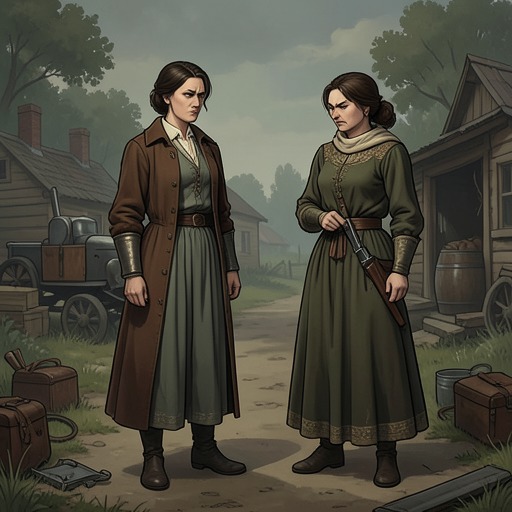
The house’s surroundings sharpen the contrast between its past and present. The Harler family has brought home rusted tins, broken automobiles, empty gas tins, old mattresses, plumbing fixtures, and wash tubs, which lie piled there despite the house’s former beauty. Mary Katherine says she genuinely believes the Harlers loved these things, an observation that makes the clutter more than a sign of decay: it is the visible condition of the house she must pass.
The Rochester house also anchors memory across generations. Mary Katherine recalls her mother saying that a crack in the sidewalk outside Stella’s had already been there when she was a girl at the Rochester house. That recollection places the crack in the sisters’ family past and links their mother’s childhood home to the Village’s persistent landscape. For Mary Katherine, the house is not simply an architectural relic; it is an unwelcome reminder of the family history embedded in a town she would rather cross without meeting.